What Carbohydrates Do to Your Blood Sugar vs. Protein — And Why It Matters for Weight Loss
- Makeda Mikael
- Apr 30
- 3 min read

When you're trying to lose weight — especially if you're navigating life before or after bariatric surgery — understanding how food affects your blood sugar is key. It’s not just about calories; it’s about how your body responds to the types of food you eat.
Let’s break down the difference between carbohydrates and protein — and what they each do to your blood sugar.
First, What Is Blood Sugar?
Blood sugar (or blood glucose) is the amount of sugar in your bloodstream at any given time. Your body uses glucose as its main source of energy. But the amount of sugar in your blood needs to stay in a safe range — not too high, not too low — for your body to function properly.
Your food plays a major role in this. Especially carbohydrates.
What Happens When You Eat Carbohydrates
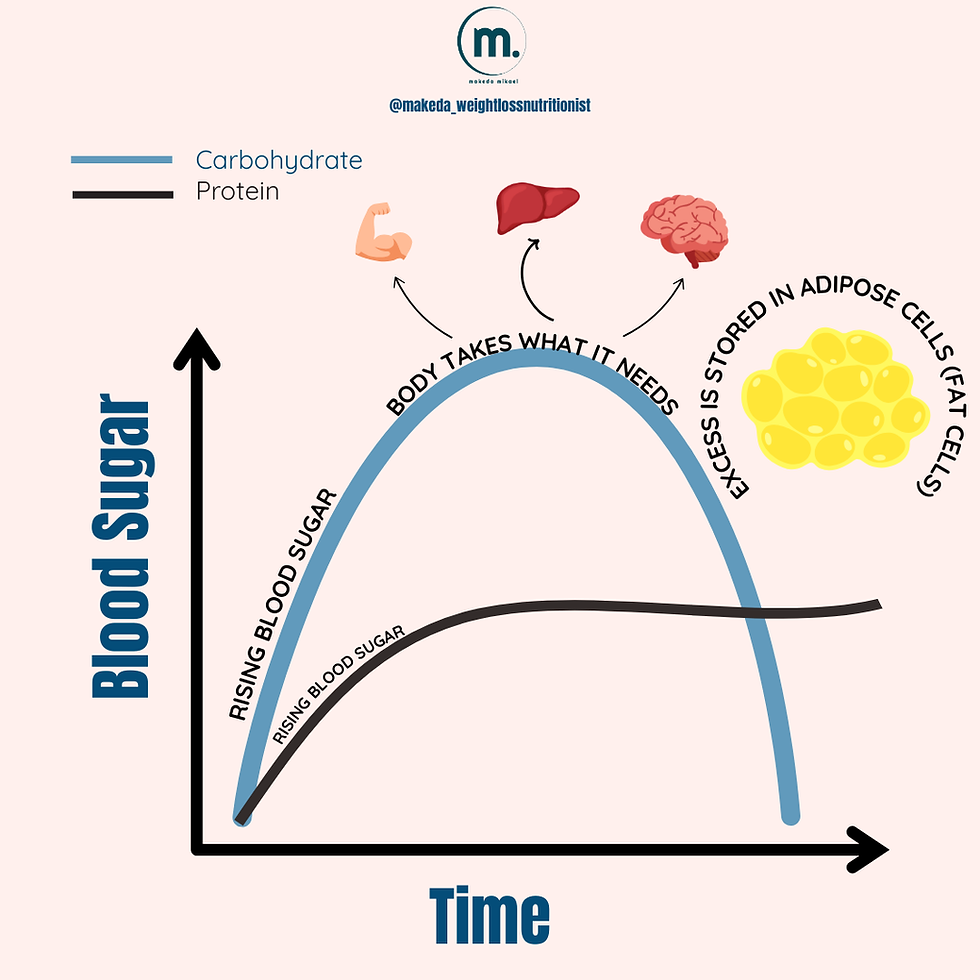
Carbohydrates (like bread, pasta, fruit, rice, and sugar) break down into glucose (sugar) during digestion. This glucose enters your bloodstream and causes your blood sugar levels to rise.
The faster or higher that spike, the more your body releases insulin — a hormone that helps shuttle that sugar into your cells.
But here’s the catch:
Fast-digesting carbs (like white bread, sugary snacks, juices) cause a quick spike in blood sugar.
After that spike, blood sugar often crashes, which can leave you feeling tired, hungry, and craving more carbs.
This spike-and-crash cycle can lead to:
Fatigue
Overeating
Weight gain
Increased hunger
Difficulty controlling cravings
Now, What Happens When You Eat Protein
Protein (found in foods like chicken, eggs, Greek yogurt, tofu, and protein shakes) digests much more slowly than carbs. It has a minimal effect on blood sugar.
In fact, protein can actually stabilize blood sugar by:
Slowing down how fast food leaves your stomach
Helping you feel fuller longer
Reducing blood sugar spikes when eaten with carbs
Supporting muscle repair and metabolism
That’s why protein is a cornerstone of bariatric nutrition and weight loss in general.
A Quick Example:
Imagine you eat:
A slice of white toast (carb only) → quick blood sugar spike, followed by a crash.
A slice of toast + an egg (carb + protein) → slower blood sugar rise, more stable energy, longer-lasting fullness.
Same calories, totally different effect on your body.
So What Does This Mean for You?
If you’re:
Struggling with cravings,
Experiencing weight regain after bariatric surgery, or
Feeling like you’re always hungry…
You might need to focus less on cutting calories and more on balancing your carbs with protein.
Here are 3 easy tips:
Always pair carbs with protein — like apple slices with peanut butter or a tortilla with turkey and cheese.
Start your meals with protein first — this is especially helpful post-op.
Limit fast-digesting carbs — swap sugary snacks for something with protein and fiber.
Bottom Line
Carbs aren’t bad — but on their own, they can send your blood sugar (and your hunger) on a rollercoaster. Protein is your blood sugar’s best friend: it slows things down, keeps you fuller, and supports steady energy.
And when you’re trying to lose weight — especially with a bariatric background — steady is powerful.
Want a cheat sheet to help you build balanced, blood sugar-friendly meals?
👉 [Download My Free “7 Day Meal Plan and Meal Prep” Guide Here!]
For quick information and inspirational posts- follow my IG account @makeda_weightlossnutritionist


Comments